A Culture of Drinking Chocolate
Mörk Chocolate × Cacaogoto

Melbourne, Australia 2025
Melbourne is a city that takes seriously the question of what chocolate can be as a drink.
This visit began with Giselle Weybrecht — a sustainability researcher and devoted hot chocolate enthusiast I had met at the cacao masterclass in the Dominican Republic — who invited me to a chocolate event in Melbourne. It was Giselle who then connected me with Josephin, the owner of Melbourne hot chocolate brand Mörk Chocolate, which led to a workshop at the Mörk shop as well.
A connection formed in the world, taking shape in Melbourne.
Exhibiting at the Chocolate Event
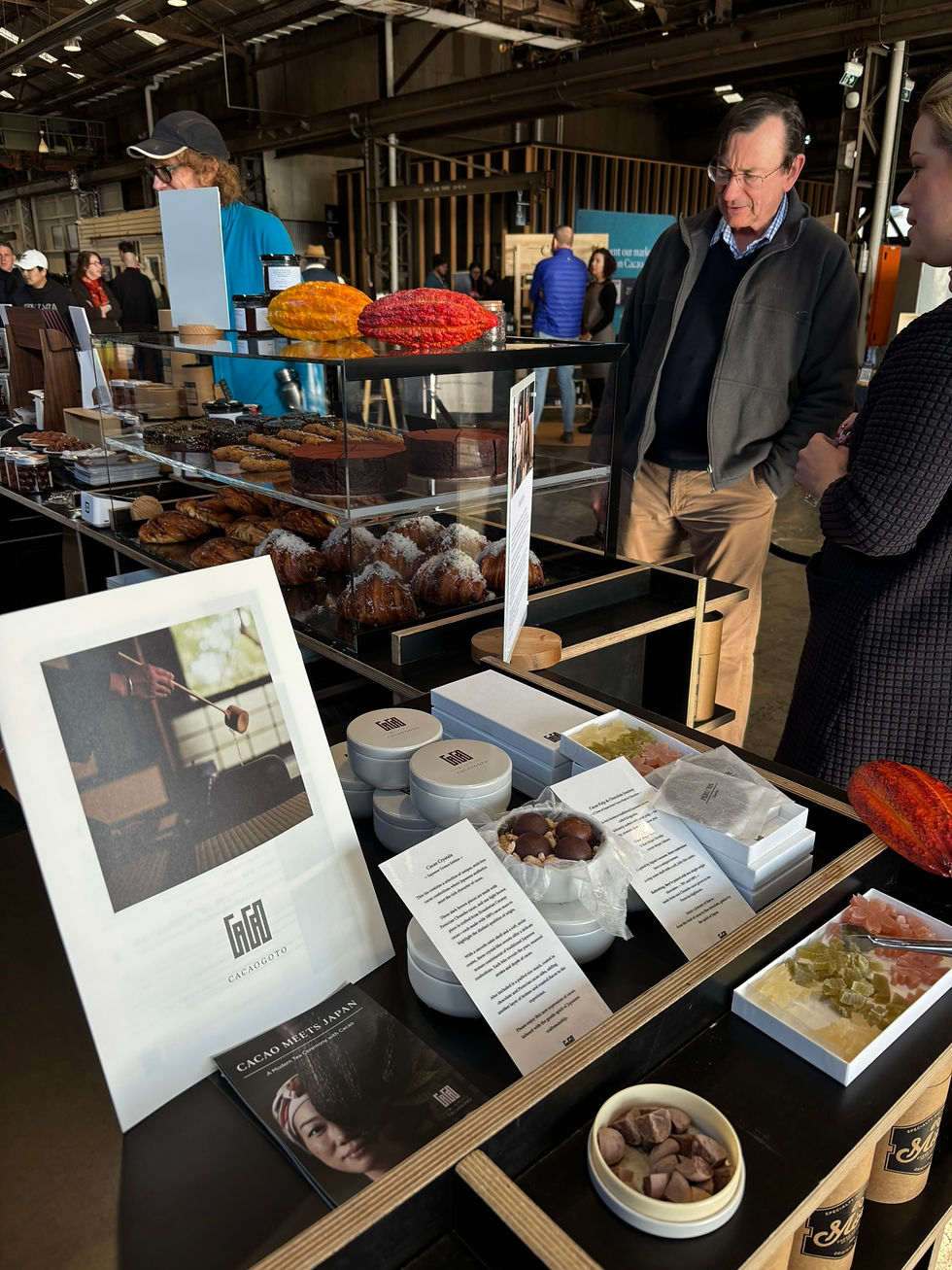
At a chocolate event held in Melbourne, Cacaogoto presented its products from a corner of the Mörk Chocolate booth.
Matcha is already widely known in Melbourne — matcha cafés are a common sight across the city. Sakura and yuzu, on the other hand, were still unfamiliar to many. When people tasted them, the reaction often started with "What is this flavor?" — but everyone enjoyed it. Interest in Japan ran high; people came to the booth saying "I'm going to Japan soon" or "I love anime," and a few even spoke a little Japanese.
It was a place where I felt, directly, how Japanese flavors were being received with genuine freshness.
Cacao Latitudes Melbourne Masterclass

Between the event and the workshop, I also attended a two-day intensive session of the Cacao Latitudes masterclass. Without the farm and fermentation visits of the full program, it was structured as a series of lectures covering the cacao industry systematically — a different shape from the eight days in the Dominican Republic, but a useful opportunity within this trip to update my understanding of how the cacao world is moving.
Mörk Chocolate

Mörk Chocolate is a specialty hot chocolate brand born in Melbourne. Built around sustainability, transparency, and traceability, it engages seriously with cacao quality and origin. The brand was built together by Kiril, who came from the specialty coffee industry, and Josephin, a chocolatier — and with them came a sensibility shaped by specialty coffee culture, brought into the world of chocolate.

Josephin is a chocolatier originally from Sweden. She creates drinks using rare Australian spices, and also makes chocolates that carry something of her home country's food culture. Tasting a new chocolate in the atelier, I was struck by a memory of a restaurant I had visited in Sweden. The flavor of the Nordic landscape was there, in a single piece.
The Same Act, Different Cultures

Mörk's hot chocolate and the Cacaogoto ceremony. Both are forms of drinking chocolate — yet the thinking behind them is entirely different.
Josephin's approach is like a single musician layering every note on one instrument, each element finding its place in perfect proportion. Cacaogoto, by contrast, is more like an orchestra — individual instruments each sounding their own voice, arriving at unity at the close. Both are moving toward the same act of drinking chocolate. The path each takes is its own.
After the workshop, Josephin said she had received a new perspective on what a chocolate drink can be. Those words meant the same thing to me, in return.
The Cacaogoto Ceremony

At the workshop in the Mörk shop, we held the Cacaogoto Ceremony — an experience of cacao's fragrance and flavor through wagashi made from various parts of the cacao plant, and a bowl of Cacao Ippuku whisked from 100% cacao chocolate with a chasen.

In Melbourne — a city where a culture of drinking chocolate has genuinely taken root — delivering a way of experiencing cacao born from the spirit of Japanese tea ceremony. That combination was what made the evening.
Where Two Cultures of Drinking Chocolate Meet

Mörk expresses chocolate as a drink through hot chocolate. Cacaogoto expresses it through the cacao ceremony. Two expressions born from the same material, carrying different cultures and different philosophies — meeting in Melbourne.
And that meeting had begun with a single connection, made at a masterclass in the Dominican Republic. This is how cacao moves across countries and cultures, and continues to bring people together.

